HOME
WHY QUINOA
01 · The First Agricultural Revolution 02 · The Question Has Changed 03 · The World Needs New Crops 04 · Why Quinoa? Complete Nutrition
PLATFORM
The Jiaqi Platform Germplasm Platform Precision Breeding Platform Genomics Platform Farming Platform Food Innovation Platform Impact CONTACT Home / 首页 EN | 中文
JIAQI WEBSITE DESIGN SYSTEM v3.0   |   PLATFORM DOCUMENTARY TEMPLATE
EPISODE 03   ·   GENOMICS
EPISODE 03

GENOMICS

Reading the language of life.

From 2,260 resequenced germplasm accessions to 41 TB of genomic data, Jiaqi is building a genomic foundation for quinoa discovery and future breeding.

Jiaqi Genomics PlatformFrom laboratory data to breeding decisions
01

From Diversity to Data

2,260
Quinoa germplasm accessions whole-genome resequenced
41 TB
Genomic data generated for research and breeding
GWAS
Connecting genome-wide variation with important traits
02

Understanding Population Diversity

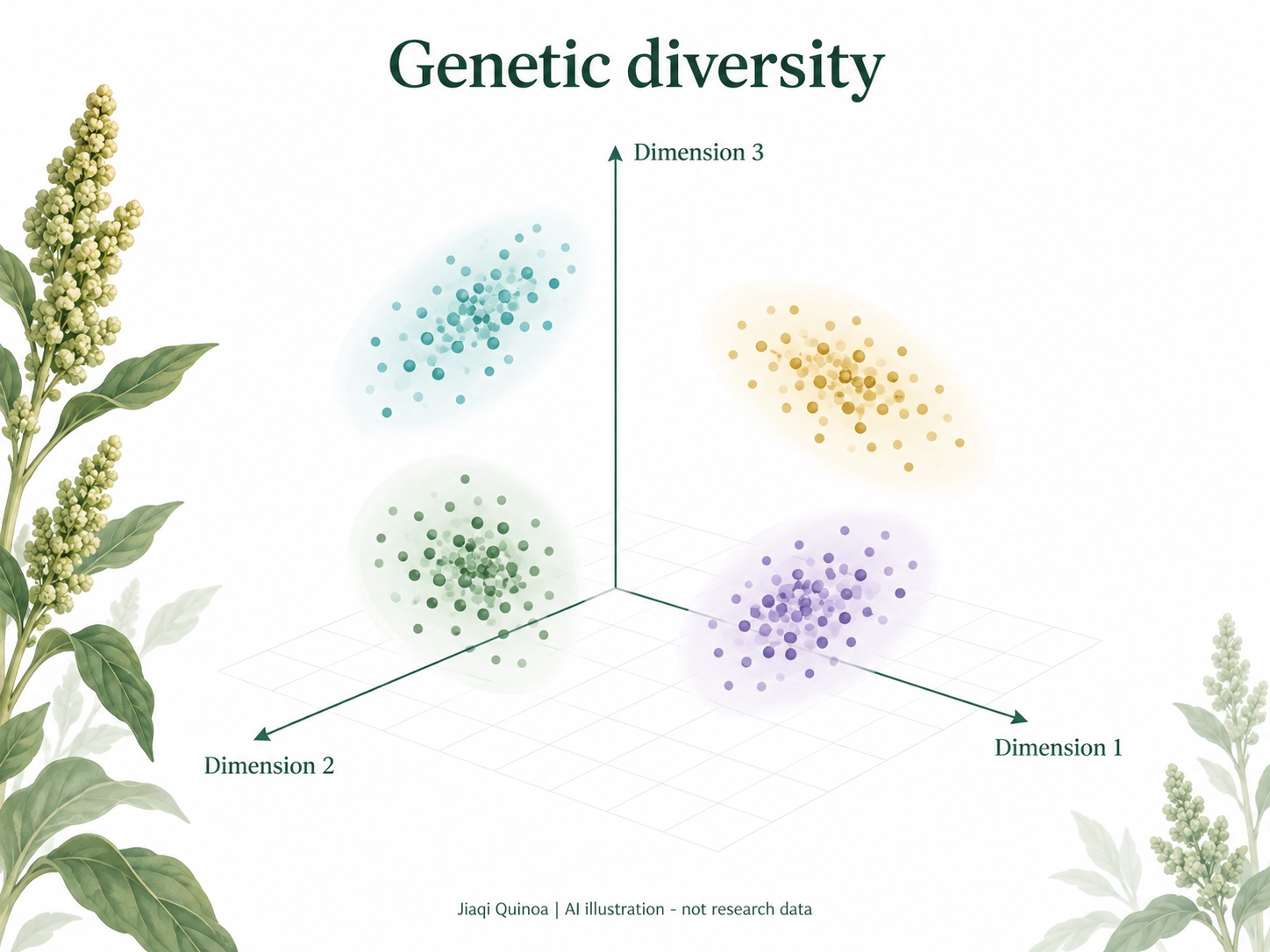
Genome-wide analysis reveals how quinoa diversity is structured across ecological groups, including coastal, highland, middle and wild resources.

PCA plot of quinoa population structure
Population Structure
Coastal · Highland · Middle · Wild
03

From Sequence to Discovery

Resequencing transforms biological diversity into analyzable genomic variation.

Quinoa PCA

Population Structure

Genetic relationships among major quinoa ecological groups.

Quinoa structural variation and pan-genome analysis

Structural Variation

Large-scale genome variation helps explain hidden diversity.

Quinoa population structure analysis

Population Genomics

Highland, middle, coastal and wild groups reveal evolutionary history.

Jiaqi laboratory genomics work

Genomic Platform

Laboratory work, sequencing data and breeding questions are connected.

04

Population Genomics

Behind every accession is a history of adaptation. Genomics allows Jiaqi to see relationships that cannot be observed in the field alone.
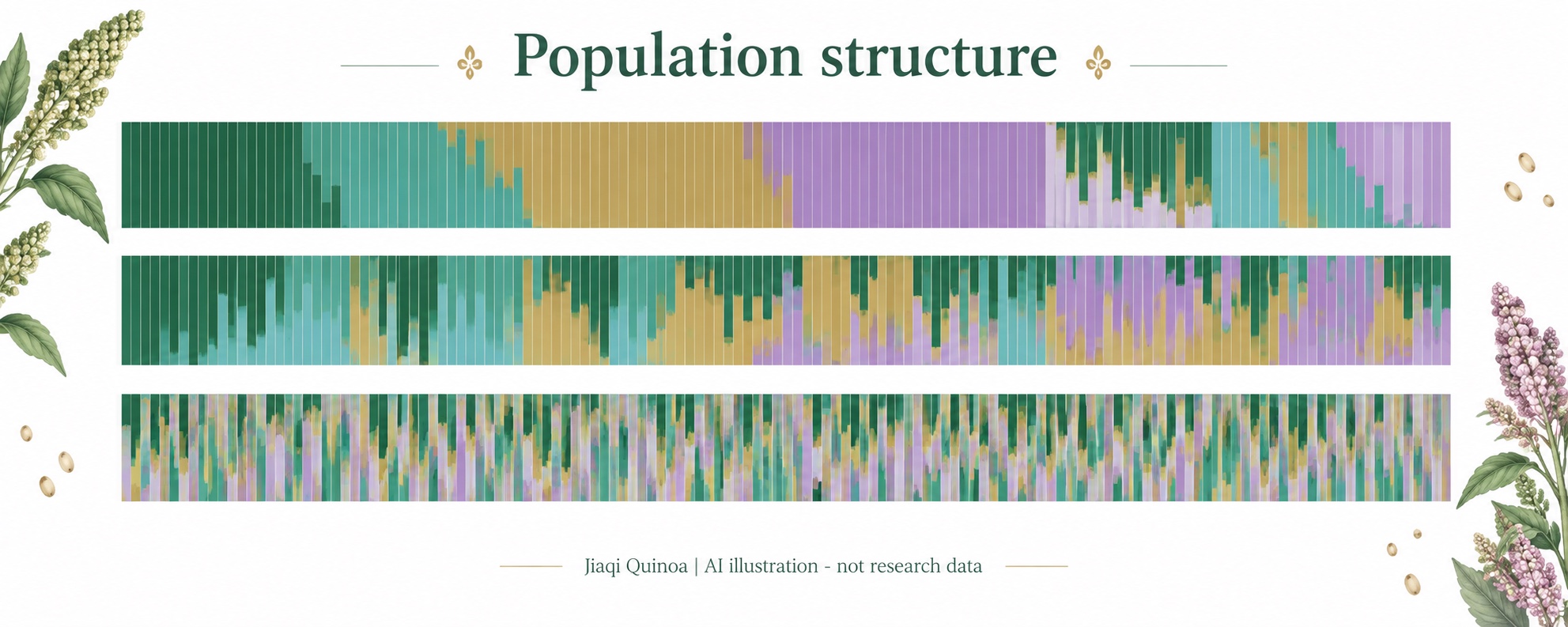
Population structure across quinoa groups
Genome-wide Population Structure
Highland · Middle · Coastal · Wild
05

Genomics Empowering Breeding

Genomics does not end in data. It returns to breeding through GWAS, gene mapping, candidate gene discovery and marker development.
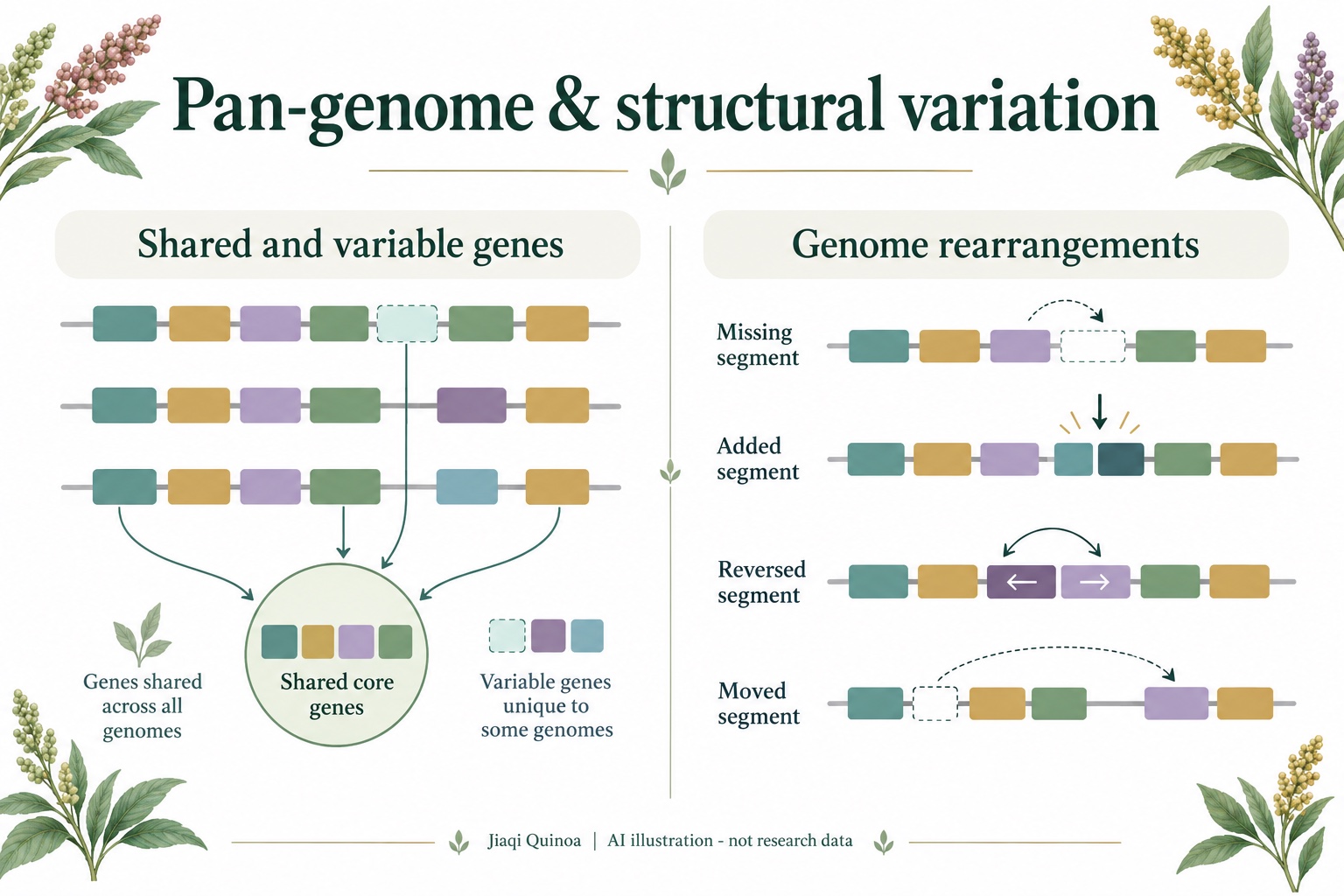
Pan-genome and structural variation charts
Pan-genome and Structural Variation
From genome variation to trait discovery
06

Genomics in Action

Breeding creates materials. Genomics explains them and makes them traceable.

GWAS

Connecting phenotypes from the field with genome-wide variation.

Gene Mapping

Locating genomic regions associated with key breeding traits.

Marker Development

Turning biological discoveries into practical breeding tools.

Trait Discovery

Supporting future work on herbicide resistance, maturity, stress tolerance and plant architecture.

07

A Genomic Foundation for Future Varieties

2,260
Accessions Resequenced
41 TB
Genomic Data
GWAS
Trait Association Discovery
4
Major Ecological Groups
Breeding
Data Returns to the Field
We do not just sequence genomes.
We discover the biology behind future agriculture.